EKWC Artist Residency: Ceramic Meltdown
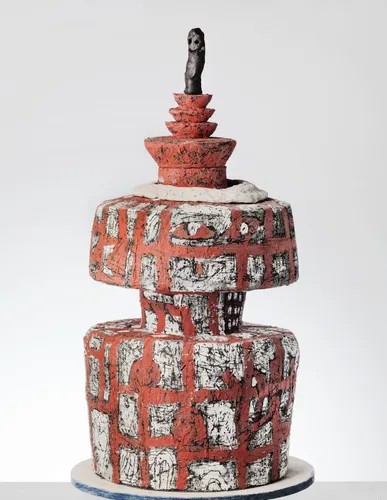
"Before the residency I used only a knife and fork to make my ceramics. After 3 months, I'd added a scraper and lost the fork."
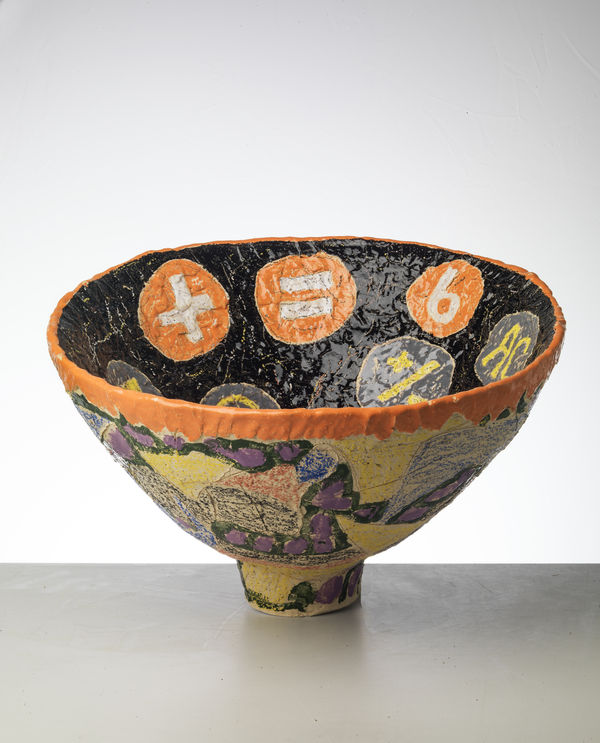
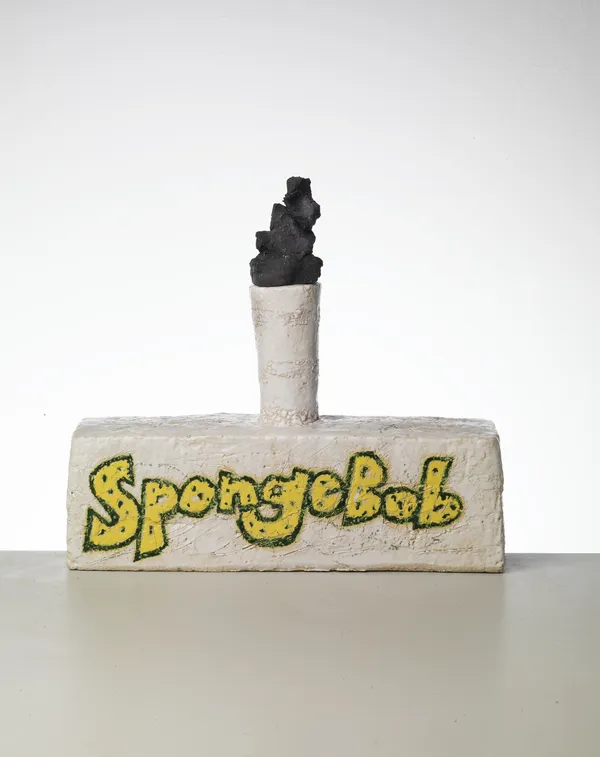
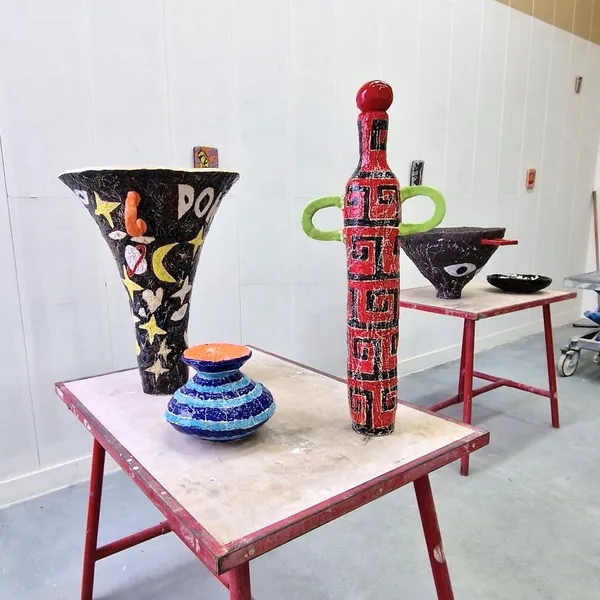
These works were made during an intense 3 month residency at the European Ceramic Work Centre (EKWC) in The Netherlands. A mix of a live-in ceramic monastery, university, and big brother style game show, staffed with a team of all-knowing advisors, out-of-this-world facilities, and 15 other artists/designers/architects/makers from all over the world.
I've had some previous experience in ceramics- I took a therapy class ages ago, and then built up a self-taught knowledge from there, in an ad-hoc autodidact way, always relying on others to fire and glaze my pieces. Until the EKWC, I often found ceramics to be a closed-off world, like the mafia or horse riding.
People guard their secrets and turf tightly. Progress for me was always very slow. When a piece came out not so good, which was often, I was always told it was my fault. (Which to be fair, it might have been 50% of the time.)
With the surge of AI, and naturally swimming against the current, I've really leaned into making things by hand, doing things by myself, trying to go below the surface. Doing work that takes time and sets the mind thinking and travelling. I wanted to take this attitude and go down the ceramic rabbit hole, but didn't know how and where to restart this journey. Serendipitously, I was offered the opportunity to take part in the EKWC programme. I jumped at it. My plan was to hand-build vessels- something that humans have been doing for thousands of years. Nothing fancy, no moulding, no 3D printing, no assistants, no pyrotechnics, no nothing. Just earth, fire, water, my hand, and a clock that ticks. Time, I learnt, is the primary medium you're working with when you dance with ceramics.
I came in wanting to really immerse myself in learning, and advance in techniques I'd only dreamt about before. I think I did that. I had no idea how this body of work would turn out- ceramics are wonderful like that. I could have left with nothing, but ended up with a group of pretty amazing sculptures. The clay really guides you and takes you places.
Along the way I learnt about the quartz inversion between 550 and 570 deg, endothermic reactions, how clay particles like to have a party inside a kiln, high bisque and low glaze vs low bisque and high glaze, cooling speeds, red clay, black clay, white clay, how one clay can be forgiving and another a cruel frenemy, keeping things wet, bending time through controlled drying, the plastic, leatherhard, dark, and light-cold stages of clay, VTR, OGH and sinter engobe glazes, what a crayon can do, how easy it is to make a crayon, how you're just paying for water if you use premixed glazes, how to make glazes from scratch, how to use beach sand instead of silica, interior and exterior support columns, East German and Bolivian hacks, the horror of a cold draught, mending cracks, making slabs and tiles, deflocculants, earthenware vs stoneware, charmotte, grog, molochite, peppercorns in the butt, electric and gas kilns, how to stack them, reduction firing, props, shelves, forklifts, soaking, tension build up, making hard things look easy, and how to cook for 16 people after a long day coiling clay.
I exited out the other side a little exhausted, like how you feel after running a marathon, but with the end prize of being one step closer to becoming a ceramics guru.
Before the residency I used only a knife and fork to make my ceramics. After 3 months, I'd added a scraper and lost the fork.